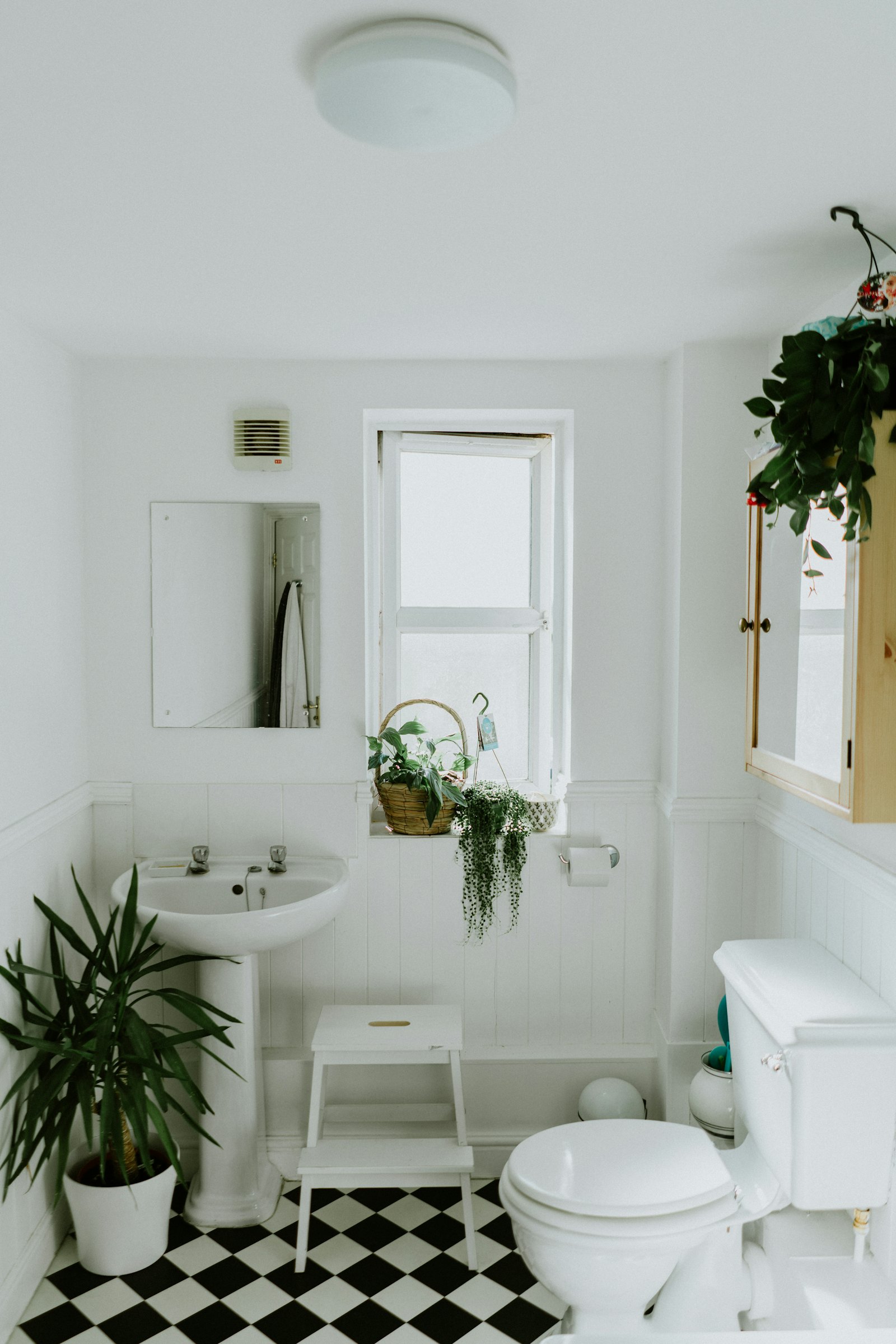
Bathroom remodeling in Burlington is usually a small bath in an older wood house, with a season attached if the work opens the roof or an outside wall. Old North End houses stack tight rooms and narrow stairs. Hill Section houses add plaster and longer runs. A fan that should vent through the roof is a summer job if the roof is under snow and ice. Interior tile and a fixture that stays on the existing stack can be planned while the sidewalks are closed. Say which scope you actually have.
Plaster, a bouncing floor, and a window in the shower are ordinary. The ceiling below tells you if the pan or the wax ring has already failed. Cast-iron tubs and turning stairs do not get along. A closet stolen for a shower still needs a vent that reaches daylight, and that vent may have to wait for the roof season. Do not close the wall on a fan that dumps moisture into an attic that already ices.
Keeping the toilet where it is avoids a joist cut and a second-floor ceiling. Galvanized branches run rusty, and new tile will not clear them. A line moved into an outside wall can freeze during a lake-cold week if that wall is the one the wind hits. Mention heat in the room. If this is the only bath, it has to stay usable. That constraint matters more on a tight lot where you cannot park a temporary setup in a big yard.
Soft subfloor means the leak is older than the idea of remodeling. Slow drains and gurgling may be a vent you should fix before the finishes. Well versus city water is worth one sentence if you are on the edge of town and not on the street main. Most of the peninsula neighborhoods are talking about stacks, not wells. Say the neighborhood so that guess dies early.
Describe the floor, the stain below, and whether a roof vent or an outside wall is part of the job. List what must stay in service. Have the season in mind only if the shell has to open. Call the number on this page.